December 14, 2025
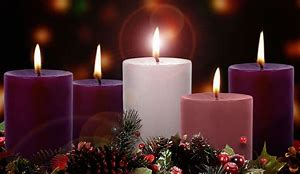
THIRD SUNDAY OF ADVENT: JOY
GOD’S WORD FOR TODAY:
“The joy of the Lord is my strength.” (Nehemiah 8.10)
TODAY’S REFLECTION ON GOD’S WORD:
Have you ever stopped to consider what is God’s joy? Is it His happiness to see how His word does not return to Him empty? Isaiah listens as God speaks to him concerning the restoration of Israel. Yes, that people of “unclean lips” of which he himself was a part, those with stubborn and willful hearts just as grief had made him even in the presence of the Lord, those people who had convinced themselves that God had surely abandoned them into the hands of the enemy forsaking their own admission of guilt and acceptance of His discipline. Even after all of that, God still spoke of reconciliation and restoration with a promise of great joy. In Isaiah 55, we read of God’s ways and thoughts being higher and more pure than anything those in the world could imagine or attempt to create. We also read in verse 11, “…so is My word that goes out from My mouth: It will not return to Me empty but will accomplish what I desire and achieve the purpose for which I sent it.” Mighty ones of God, does that descriptive thinking sound familiar to you? It should, because that is the very essence of the biblical word “good.” God is terribly consistent, if nothing else. Of course, He exceeds consistency. He is doggedly determined to convince the people on earth of His joy; His goodness; His desire to love beyond measure; and, because of His gift of freewill which opens up the seemingly infinite possibilities of our choosing, His mercy and grace. Yet, in this moment, it is His “consistency” that I want to reflect upon this third Advent Sunday. In seeking an answer to the question posed before, “What is God’s joy?”, I cannot journey any further than to see its connection to God’s “good” and “goodness.” We experience a similar “joy” when what we set out to do to bring benefit to others, and to ourselves (hopefully the former and not the latter in that order of operation), actually comes to fruition. This is the meaning of “My Word goes out of My mouth and will not return to Me empty.” God does not mince words nor does He waste them. In the process of creation, God spoke the Word which had formed in His mind as He considered all that could be made, the Holy Spirit carried that Word into the midst of the chaos (the unordered matter that existed without form and thus was void) relaying the command of God’s intent and the elements that were in existence and in disarray began to take shape and form. God saw it. The Holy Spirit reported it. Upon the witness of two, the declaration was “It is good.” Again, “good” represents the satisfaction of seeing the Word and the intent accomplish what it was meant to be and to do. I would ask you to take notice that while God could well have just “said it all” and it would happen all at one time, He chose instead to take it one step at a time. He let the creation evolve, get set and be prepared for what is next. One aspect of God’s creation lead to another and another and another until it all lead not to the final creation of humanity in the form and function of maleness and femaleness but to Sabbath. God’s “joy” is the expression of His goodness and the satisfaction of the fulfillment of His intention to bring light to the darkness, peace to the chaos and truth to the lack of understanding. Imagine the impact of such power which “joy of the Lord” gives!
So, the storyteller in me envisions the birth of Jesus of Nazareth in Bethlehem as that expression of great joy. It is the essence of Luke’s gospel proclamation reporting the words of the angels to the shepherds. They said, in fact- they sang, “Do not be afraid. I (a collective “I” meaning “the heavenly host” as representative of God and thus the expression of the Holy Spirit) bring you good news of a great joy which is for all people. Today, in the city of David, a Savior has been born to you. He is the Messiah, the Lord.” To make the shepherds, “joy” complete, the Angel of the Lord (serving both God and His Son) went on to say as means of instruction and preparation, “This will be sign (evidence, proof) to you: you will find a babe wrapped in swaddling cloths lying in a manger (a stable’s feeding trough).” In those early morning hours just before the dawn, the angels appeared in such glory as if a myriad of meteors penetrated the air. They streaked across the sky as if aiming directly at the shepherds and Bethlehem. They were like the burning bush at Sinai on fire but not consumed, they hurtled toward earth but did not collide with it. Their song came as a projectile through the silent night. Then, as if it hadn’t happened, the darkness returned and peace came on earth. The sun rose on the first day of the week. The shepherds drew near to Bethlehem and found an inn on the outskirt of town. It was built against a hillside along the road that led from Nazareth in the north to Kerioth in the south. In that hill was a cave turned into a stable. In that stable was a low stone with a bowl-shaped hollow which the innkeeper used as a manger, a feeding trough. Fresh hay had been placed in it by Joseph, Mary’s husband-in-waiting. Asleep on the hay was a baby wrapped in a swaddling cloth bearing the color of the House of David, former King of Israel and Master of the “House of Bread.” The animals drew near to the stall as if to sacrifice themselves to keep the baby warm enough from the chill that lurked beyond the entrance where many other families had spent the night. They huddled around meager fires of kindling and dung. The stench of the world was carried away by a strange wind uncommon in this season. It was as if it came with the sun rising in the east carrying with it the smoke from the fires up and over the inn in which there had been no room the night before. No room in the inn even for family which Joseph and Mary were as descendants of the line of David and that of the innkeeper. It was all a foreshadowing of events in the not so distant future when the Babe of Bethlehem would bear the Cross of Christ. He would be the sacrificial lamb offered for the sins of the world. The wind that would blow from east to west would carry the scent of such a fragrant offering across the valley and the wall and through the Temple. the Great Curtain would flutter against it though its weight was great separating God from humanity. It would not be able to withstand the pressure of the mighty wind. We sing of it now, “Do you hear what I hear said that mighty wind to the shepherd boy?” The very wind that would strike fear in those convinced that sin was salvation and unrighteousness was holiness would rent the veil. Its torn threads would be carried with the smoke of the censers far to the west and beyond the horizon into the darkness from which they came. Sorrow for a day but “joy comes in the morning.” (Psalm 30.5) Yes, it was David’s song of reconciliation, restoration and renewal when the Word of God would return fulfilled. It would accomplish the purpose for which it was called into being. It was indeed the “joy of the Lord” which gives strength to the weary, hope to the hopeless, life to the failing and a richness silver and gold could not provide. This is none other than Jesus of Nazareth, the Babe of Bethlehem who is Christ the Lord of all people and for all people. “O come, let us adore Him, Christ the Lord” and rejoice!
TODAY’S PRAYER IN RESPONSE TO GOD’S WORD:
Father, in these days we are finding the need to believe even more than ever before. We all have known trouble, some in greater ways than others, but You are offering us the assurance that we will not be consumed by it forever. Regardless of the “time” we are in and the “time” we have been given, we ask for Your Holy Spirit which Jesus asked You to share with us, to lead and guide and direct us in the paths we should go. Teach us what we still need to learn. Empower us to put that learning into action. Bless our actions not as a works righteousness but as righteous works of faith, hope and love in Jesus’ name. AMEN.
 Mighty Ones In His Service