December 27, 2025
ELEVEN days to Bethlehem…
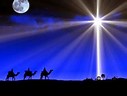
…journeying as magi.
GOD’S WORD FOR TODAY:
“God saw all that he had made, and it was very good. And there was evening, and there was morning—the sixth day..” (Genesis 1.31)
TODAY’S REFLECTION ON GOD’S WORD:
As an introduction to this Epiphany series of reflections, I mentioned yesterday that there were three journeys to Bethlehem. One journey, which we ourselves are on, is that of the magi. They were wise men, astrologers seeking guidance and prophetic insight from the patterns of the heavens at night and spiritual guides who studied the historical writings of many cultures including that of the Jews. Some scholars suggest that they came upon these writing concerning Israel because of contact with the prophet Daniel. Because of Daniel’s prominence in the Babylonian court, he would have been able to teach and learn from such advisers of the king. Other such exiles from Jerusalem would have also brought knowledge of the Word of God which would have been added to the content of study by the magi. However, I believe that these wise and studied men of the king’s court (and perhaps not just one king or country) listened purposefully to the stories told along the trade routes which navigated the Fertile Crescent to the north of Israel following the path of Abraham from the Ur of the Chaldees as well as the spice routes to the south which crossed through the Arabah and what is now called the Persian gulf to lower Mesopotamia. Both of those routes would have encountered other cultures when the Hebrews had lived and served and died. What remained constant in all of those encounters was the epic of faith wrought by God’s desire not only to create life but sustain with faith, hope and love. It was and remains an enduring legacy of spiritual peace.
There was another journey to Bethlehem which we have also reflected upon. It was not such a long journey as those mentioned above throughout the history of Israel. Just as I mentioned the fate of the exiles as being both foreign and domestic, so, too, were the journeys to Bethlehem. Obviously, the journey of the magi would fall into the category of “foreign.” That would direct our attention to a “domestic” journey. The shepherds were found in the fields on the outskirts of Bethlehem watching their sheep (not by night alone; it was a 24/7 duty.) The very work of those shepherds would take them beyond the purview of Bethlehem into the hills and valleys to the north and west including the Valley of Elah where David, the mighty shepherd of Israel, defended the honor of God by defeating the great Philistine Goliath. Those shepherds tabernacled. That means they worshipped God in whatever place they found themselves. They were, themselves, tabernacles for the sheep. They were the doors of the sheep pens in the fields and in the mountains whether they were constructed with stone or were niches in the rock and hillsides which provided shelter. In some similarity of imagery, they were like the veil of the Holy of Holies in the temple of Jerusalem which separated the awesome presence of God from intrusion by those who were not ritually assigned and prepared. They would make these shepherds akin to priests “in the field.” Their law was gospel (meaning truth) and their assignments were accorded to them by their Master. It is easy to see the depth and intensity of Jesus’ teaching on being “the door of the sheep.” (John 10.7) It is a reminder to us as well of our own importance to the flocks tendered to our care. They are not just “sheep.” They are like the sheep under the care of those royal shepherds of Bethlehem. They are precious, holy, sacred and sanctified (set aside) for the purposes of God determined long before they, and we, were born. They are indeed God’s legacy of redemption and reconciliation. So, when the Angel of the Lord appeared to them in the early morning hours when Jesus was born in Bethlehem declaring “I bring you glad tidings of great joy for unto you is born this day a Savior in Bethlehem,” they shepherds were engaged and empowered. For what purpose? They were not told to do anything but “not be afraid” and “receive the gift of spiritual renewal from the precious lamb of God.” But they were shepherds, first and always. To be told of such a babe entrusted to them would call them to Bethlehem “to go and see.” What would this journey lead them to? Duty and responsibility as shepherds is the answer. Here was one little lamb now entrusted to them for care and nurture. Their own duty and responsibility was now amplified by a spiritual truth. They knew the sheep in the field were to be the paschal lambs sacrificed in Jerusalem at the altar. What of this little lamb who would take away the sins of the world? What of His life, influence, duty, responsibility and ultimately His sacrifice at the altar in Jerusalem. We know, as they would find out, that He was “led as a lamb to slaughter but uttered not a word [against them].” (Isaiah 53.7 as a prophetic foreshadowing of Jesus crucifixion and journey along what is now known as the Via Delarosa.) What they found in Bethlehem was no ordinary “lamb of God.” There was a human being lying in a manger wrapped in swaddling cloth protected against the world unlike anything they had ever seen. They knew then they had seen the face of God.
That leads us to the third journey to Bethlehem. If you noticed, I have moved backward in time in this reflection. First was the journey of the magi which happened approximately two years after Jesus was born in Bethlehem. Then was the journey of the shepherds which happened no more than a few hours after Jesus was born in Bethlehem. Now there is the journey which set all of this in motion. It is here that the “second day of Christmas” when our true love, the Lord God Almighty, gave to us inspires this reflection. As the song, and catechism, teach, it is on the second day of Christmas that “two turtle doves and a partridge” are given to us. We know the partridge is Jesus the Christ. It is difficult for us to consider Him the partridge because the purpose of that bird was for a meal. Of course, the world still wrestles with the sacrament of communion as Jesus instituted it on the night He was betrayed and led to trial culminating in His crucifixion. We partake of the bread and wine which are emblematic of His flesh and blood given to us in remembrance of His legacy of faith, hope and love. He taught His disciples and they to us, “Take and eat, take and drink and in so doing proclaim My death until I return to eat and drink again with you.”
What then of the turtle doves? As the purpose of these Epiphany reflections might suggest, they are Mary and Joseph. They made their way to Bethlehem to be recognized as descendants and inhabitants of the House of David, the great Shepherd King of Israel who brought a divided nation (two kingdoms: North and South; ten tribes plus two tribes) into wholeness and unity with a theo-political capital in Jerusalem. They would no longer tabernacle in the wilderness. They were no longer to be nomads without a home. They would be a nation of the people of God upon whom great favor and responsibility was given. They were to be a light to the world shining in the darkness and drawing all men and nations to the singular throne of the Almighty. They were to be shepherds themselves with those nations as their flocks. It was David’s vision as He understood his calling to be a king as a boy tending his father’s sheep in those same fields as the shepherds on the day Jesus was born in Bethlehem. Now the people were divided again as they are today. They were scattered as sheep without a shepherd as they are today. But in Mary and Joseph we are reminded of “the two becoming as one.” It is a literal and figurative story of unity and harmony being submitted to the will of God for extraordinary grace. Doves, as signs of peace, are reminders here of the peace Mary and Joseph had to come to between each other as prospective husband and wife (for they were only betrothed and Mary with child) and between themselves and God who had placed upon them a great trust to bring His Son into the world. Yes, the two turtledoves would bring the partridge into a dangerous world. It was a world where death seemed to reign in the guise of power and riches as true life that should be sought by all. It was a world where true life filled with hope and blessings was only to be known by submitting to the will of God. It is little wonder than when Mary and Joseph went to Temple eight days later to offer Jesus for blessing and confirmation, it would be the offering of small birds such as a partridge to be the substitutionary token. It would be that “partridge in a pear tree” that would become the substitutionary offering for all the sins of the world. It was Simeon and Anna, a prophet and prophetess in the Temple (Luke 2.21-38) who would recognize the babe of Bethlehem as the Christ of God. They declared the fulfillment of God’s desire (He who is our true love) to save us from our sin (the cause for which true love lives and dies for.)
TODAY’S PRAYER IN RESPONSE TO GOD’S WORD:
Father, in these days we are finding the need to believe even more than ever before. We all have known trouble, some in greater ways than others, but You are offering us the assurance that we will not be consumed by it forever. Regardless of the “time” we are in and the “time” we have been given, we ask for Your Holy Spirit which Jesus asked You to share with us, to lead and guide and direct us in the paths we should go. Teach us what we still need to learn. Empower us to put that learning into action. Bless our actions not as a works righteousness but as righteous works of faith, hope and love in Jesus’ name. AMEN.
 Mighty Ones In His Service